

What is DHA and why is it important for your health?
You've probably heard that omega-3 fatty acids are good for you, but what exactly is DHA? DHA stands for docosahexaenoic acid, an omega-3 fatty acid that plays a crucial role in your body. It is mainly found in your brain, eyes, and skin, and ensures glowing health from the inside out. In this article, we explain what DHA is, why it's so important for your well-being, and where you can get it.
What is DHA and why does your body need it?
DHA is a long-chain omega-3 fatty acid that your body cannot produce in large quantities on its own. Therefore, it is important to get it through food or supplements. This essential fatty acid is a building block for your cell membranes and plays a central role in the functioning of your brain and nervous system.
The role of DHA in your body
DHA is found in high concentrations in your brain and eyes. It supports communication between nerve cells and contributes to good memory and concentration function. During pregnancy, DHA is also indispensable for the development of the baby's brain and vision.
In addition, DHA has a positive influence on:
- Your heart and blood vessels – DHA helps lower triglycerides and supports healthy blood pressure
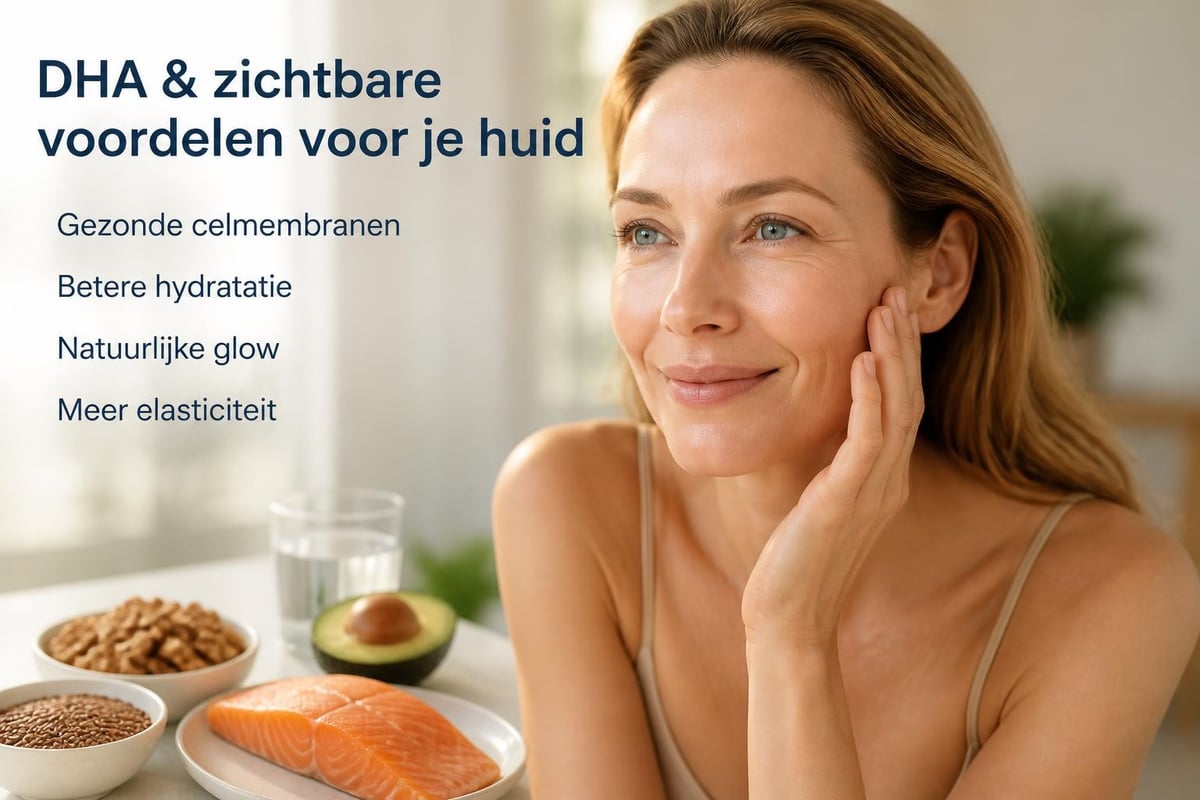
- Your skin – it contributes to healthy cell renewal and helps keep your skin supple and hydrated
- Your mood regulation – research indicates that omega-3 fatty acids can play a role in supporting your mental resilience

Where can you find DHA in your diet?
The main natural source of DHA is fatty fish such as salmon, mackerel, herring, and sardines. These fish species contain high concentrations of this valuable fatty acid. For people who do not eat fish, plant-based alternatives are also available, such as algae oil.
| Food Source | DHA Content per 100g | Note |
|---|---|---|
| Salmon | 1,000-2,000 mg | Wild salmon contains more than farmed salmon |
| Mackerel | 1,500-2,500 mg | Rich in omega-3 |
| Herring | 1,000-1,500 mg | Affordable option |
| Sardines | 800-1,200 mg | Also available canned |
| Algae oil | 200-400 mg | Plant-based alternative |
The conversion of ALA to DHA
Your body can partially convert another omega-3 fatty acid, alpha-linolenic acid (ALA), into DHA. However, this conversion is limited – only a small percentage is actually converted. Therefore, it is important to also get DHA directly through your diet.
You can find ALA mainly in:
- Flaxseed and flaxseed oil
- Walnuts
- Chia seeds
- Rapeseed oil
Although these sources are valuable, they do not fully cover your DHA needs.
DHA for different life stages
During pregnancy and breastfeeding
When you are pregnant or breastfeeding, your DHA needs are higher. The fatty acid is essential for your baby's brain development and contributes to healthy vision. Experts recommend that pregnant women consume at least 200 mg of DHA per day, in addition to the general omega-3 recommendation.
For active adults
Even if you have an active lifestyle and want to enjoy tanning without sun, DHA supports your skin health. Healthy skin starts from within. DHA helps maintain supple, well-hydrated skin that can better withstand external influences.

As you age
As you get older, DHA remains important for maintaining your cognitive functions. It can help support your memory and concentration, and contributes to maintaining a clear and alert feeling.
DHA supplements: when are they useful?
Not everyone gets enough DHA through their diet. In that case, supplements can be a convenient addition. Various supplements are available, from fish oil capsules to plant-based algae oil for vegetarians and vegans.
What to look for in DHA supplements?
- Purity – choose products that have been tested for heavy metals and contaminants
- Dosages – most adults need 250-500 mg of DHA per day
- Bioavailability – triglyceride form is often better absorbed than ethyl-ester form
- Origin – preferably choose sustainably caught fish or cultivated algae
A good self-tanner like the SolaVita Tanning Lotion gives you a healthy glow from the outside, while DHA contributes to radiant skin from the inside.
The link between DHA and radiant skin
Your skin is your largest organ and constantly needs nutrients to stay healthy. DHA supports the structure of your skin cells and helps maintain the natural moisture balance. Well-hydrated skin not only looks healthier but also feels softer.
That's why a combination of good nutrition and external care works best. Just as you can create an even complexion with the right self-tanner, DHA ensures from within that your skin remains supple and resilient.
Practical tips for sufficient DHA
- Eat fatty fish twice a week – this largely covers your DHA needs
- Vary your omega-3 sources – combine fish with plant-based options
- Store fish oil properly – omega-3 fatty acids are sensitive to light and heat
- Consider a supplement – especially if you don't eat fish or are pregnant
- Pay attention to quality – fresh is always better than long-stored
DHA and the cosmetic industry
Although DHA in nutritional supplements stands for docosahexaenoic acid, the same abbreviation also appears in the cosmetic world. There, DHA stands for dihydroxyacetone, the active ingredient in self-tanners. These are two completely different substances with different functions.
Dihydroxyacetone in self-tanners reacts with the amino acids in the top layer of your skin, creating a natural-looking tan. The omega-3 fatty acid DHA, on the other hand, works from within for your health. At Tanning Glamour, we understand the importance of both internal and external care for a radiant appearance.
| Aspect | DHA (omega-3) | DHA (self-tanner) |
|---|---|---|
| Full name | Docosahexaenoic acid | Dihydroxyacetone |
| Use | Nutritional supplement | Cosmetic product |
| Function | Internal, health | External, color change |
| Purpose | Support brain, heart, skin | Create a tanned complexion |
How to recognize a DHA deficiency?
A deficiency in omega-3 fatty acids, including DHA, can manifest in various ways. Often, the symptoms are subtle and not immediately recognized as being related to diet.
Possible signs include:
- Dry, flaky skin
- Concentration problems or difficulty focusing
- Fatigue or a dip in energy
- Stiff joints
- Mood swings
If you recognize these signs, it may be useful to evaluate your diet. If in doubt, always discuss your complaints with a doctor or nutritionist before making major changes.
The future of DHA research
Scientists continue to research the many benefits of DHA. Recent research focuses on the role of omega-3 fatty acids in inflammatory processes, post-exercise recovery, and even gut health. As we learn more about how DHA works, it becomes increasingly clear how valuable this fatty acid is for your overall well-being.
Now that you understand what DHA is and why it's so important for your health, you can make more conscious choices for your diet and well-being. Caring for yourself from within with good nutrition and radiating from the outside with a healthy complexion – that's the combination for an optimal appearance. Tanning Glamour helps you enjoy an even, natural tan without sun that lasts for up to 5-7 days, so you always feel well-groomed and confident.
Ontdek jouw mooiste glow
Verzorgende zelfbruiners van SolaVita - streeploos, geen oranje.




Read more

Discover everything about self-tanning drops: from application to dosage. Create an even, natural tan that perfectly matches your skin.

Discover why a self-tan mitt is essential for an even, natural tan. Everything about use, maintenance, and tips for a perfect glow.