
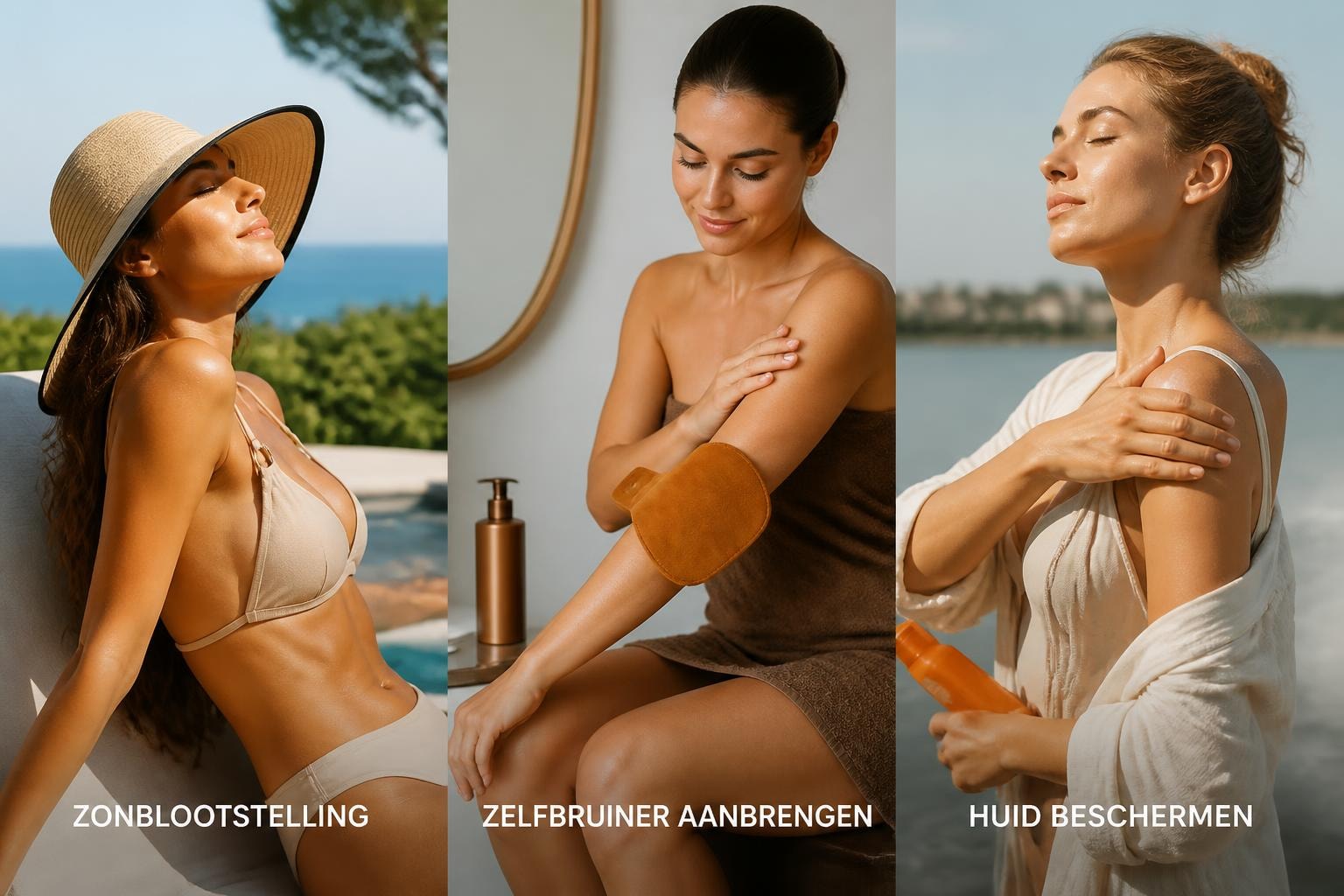
Tanning: Safely Enjoy a Natural, Radiant Complexion
Radiant, tanned skin makes many people feel healthier and more confident. The desire to get a tan is certainly not new, but the way we can achieve this safely and responsibly has changed significantly in recent years. In 2026, health will be central, meaning more and more people are making conscious choices about how they want to achieve their desired complexion. Whether you choose sun exposure, a tanning bed, or modern alternatives such as self-tanners, it is essential to understand what happens in your skin and which method best suits your lifestyle.
What happens in your skin during the tanning process
When your skin is exposed to UV radiation, a complex protective mechanism is activated. The Skin Cancer Foundation explains what exactly happens in the skin during tanning and emphasizes that a tan is actually a distress signal from your skin.
The role of melanin in tanning
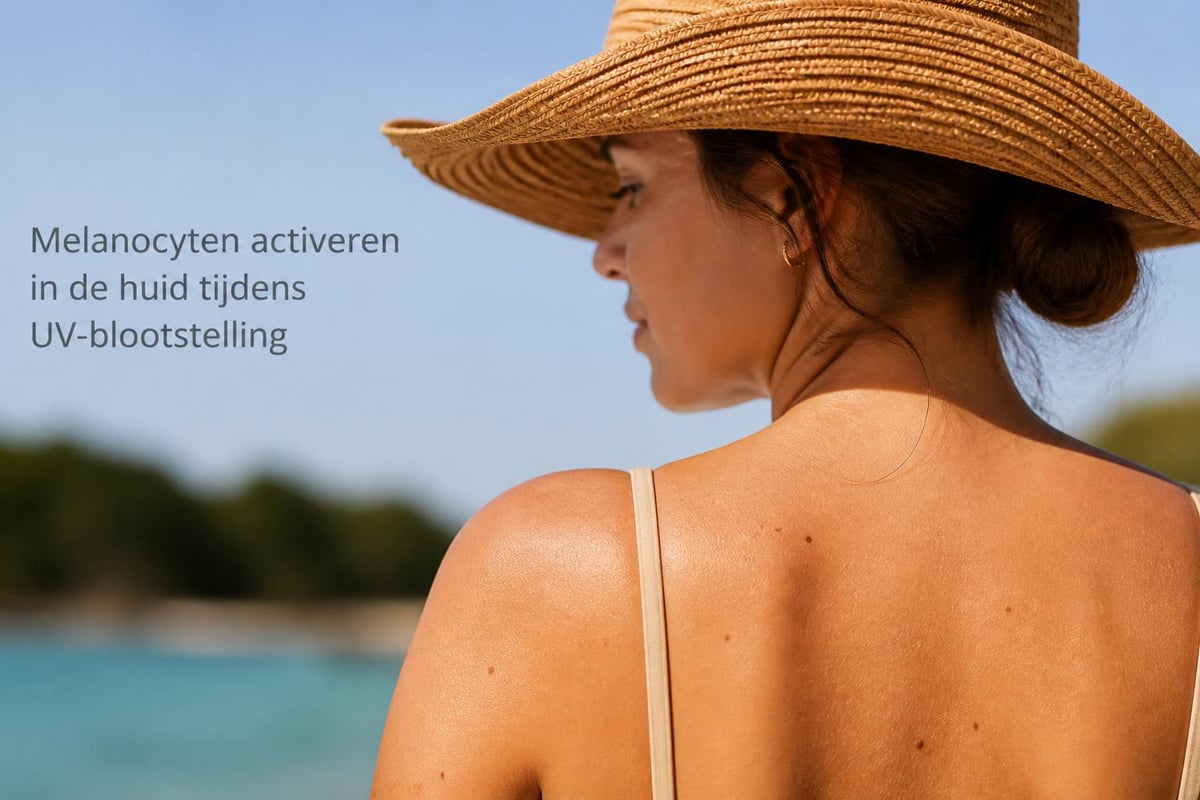
Your skin contains cells that produce melanin: melanocytes. This substance gives color to your skin and protects deeper skin layers from harmful UV radiation. When you are in the sun:
UV radiation activates melanocytes
These cells start producing more melanin
The melanin spreads through the upper skin layers
Your skin gets a darker shade as a protective mechanism
It is important to realize that tanning is always a reaction to skin damage. Your skin tries to protect itself from further exposure. This explains why even a light tan carries health risks , as recent studies have shown.
Different skin types and tanning
Not everyone tans at the same rate. RTL Nieuws explains why some people tan faster than others, and this has everything to do with your skin type. Dermatology uses the Fitzpatrick scale for this.
Skin Type |
Characteristics |
Tanning Reaction |
Sunburn Risk |
|---|---|---|---|
Type I |
Very pale, freckles, red hair |
Never tans |
Extremely high |
Type II |
Pale, blonde hair, blue eyes |
Minimal tanning |
High |
Type III |
Lightly tanned, dark blonde/brown hair |
Gradual tanning |
Moderate |
Type IV |
Olive-colored, dark hair |
Tans easily |
Low |
Type V-VI |
(Very) dark, black hair |
Already darkly pigmented |
Very low |
Your skin type not only determines how quickly you tan, but also what protective measures you should take. For people with skin types I and II, tanning through sun exposure is particularly risky, and it is recommended to consider alternative methods.
Responsible tanning in the sun
For those who still choose natural sun exposure, there are important guidelines to do so as safely as possible. It's about finding a balance between building a tan and protecting your skin.
Gradual buildup is essential
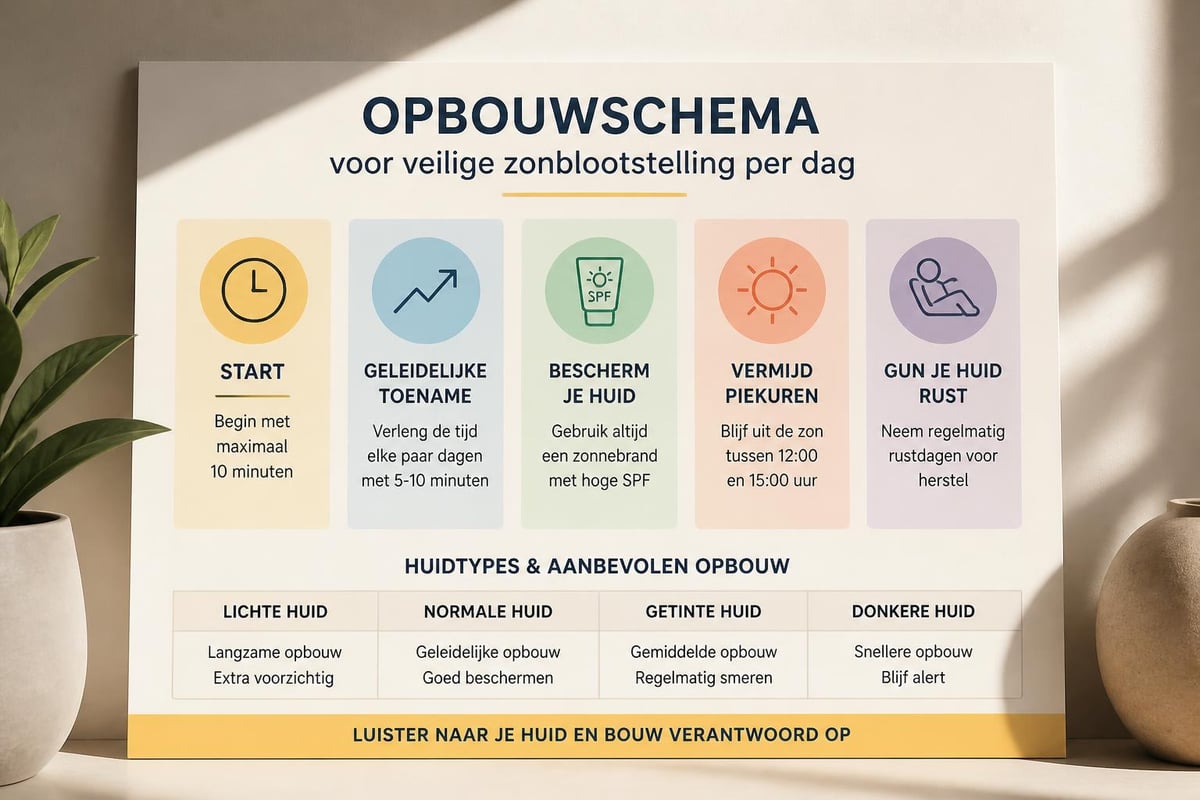
Always start with short periods of sun exposure. For most skin types, this means:
Start with a maximum of 10-15 minutes of direct sunlight
Increase this by 5 extra minutes daily
Sun protection is always necessary
Avoid the strongest sun hours between 12:00 and 15:00
The best results are achieved by being consistent. Regular, short exposure gives a more even result than occasional long sun sessions. Viata offers practical tips to tan faster, including the importance of skincare and nutrition.
Sun protection: indispensable for healthy tanning
A common misconception is that sun protection prevents tanning. This is not true. A good sunscreen protects against harmful UV-B radiation (which causes sunburn), while UV-A radiation (which stimulates tanning) still penetrates.
Choose at least SPF 30 and reapply every two hours, especially after swimming or sweating. This may slow down the tanning process slightly, but it protects your skin from premature aging and more severe damage.
Nutrition and supplements for a more beautiful complexion
What you eat affects how your skin reacts to sunlight. Certain nutrients support your skin's natural protection and can promote a more even tan.
Beta-carotene and vitamin A
Beta-carotene is a precursor to vitamin A and gives your skin a subtle, warm glow from within. It is found in:
Carrots and carrot juice
Sweet potatoes
Pumpkin and butternut squash
Dark green leafy vegetables like spinach
Mango and apricots
Note: beta-carotene supplements give an orange tint, not a tanned look. For a natural effect, it is better to get this substance from food.
Other important nutrients
Nutrient |
Function |
Sources |
|---|---|---|
Lycopene |
Antioxidant, protects against UV damage |
Tomatoes, watermelon, grapefruit |
Vitamin E |
Skin repair, cell renewal |
Nuts, seeds, avocado |
Omega-3 fatty acids |
Anti-inflammatory, skin barrier |
Fatty fish, flaxseed, walnuts |
Vitamin C |
Collagen production |
Citrus fruits, bell peppers, broccoli |
The risks of excessive sun exposure
Although sun-tanned skin is an ideal for many, it is crucial to understand the long-term effects of UV radiation. Skin damage accumulates over years, and the effects often only become visible later.
Short-term and long-term health effects
In the short term, excessive exposure can lead to:
Sunburn and painful skin
Dehydration and reduced skin barrier
Temporary swelling and redness
Increased sensitivity
The long-term effects are more severe. Chronic UV exposure causes premature skin aging, such as deep wrinkles, pigment spots, and a leathery skin texture. Most concerning is the increased risk of skin cancer, including melanoma.
For people who regularly sunbathe or use a tanning bed, it is advisable to have an annual skin check-up with a dermatologist. Early detection of abnormalities can be life-saving.
Self-tanners: tanning without the sun
In 2026, self-tanners have become a safe and effective alternative for those who want a tanned look without the risks of UV radiation. Dr. Jetske Ultee discusses how to safely achieve a tan without sun exposure.
How modern self-tanners work
Self-tanners contain dihydroxyacetone (DHA), a sugar molecule that reacts with amino acids in the top layer of your skin. This reaction causes a brown discoloration without UV radiation.
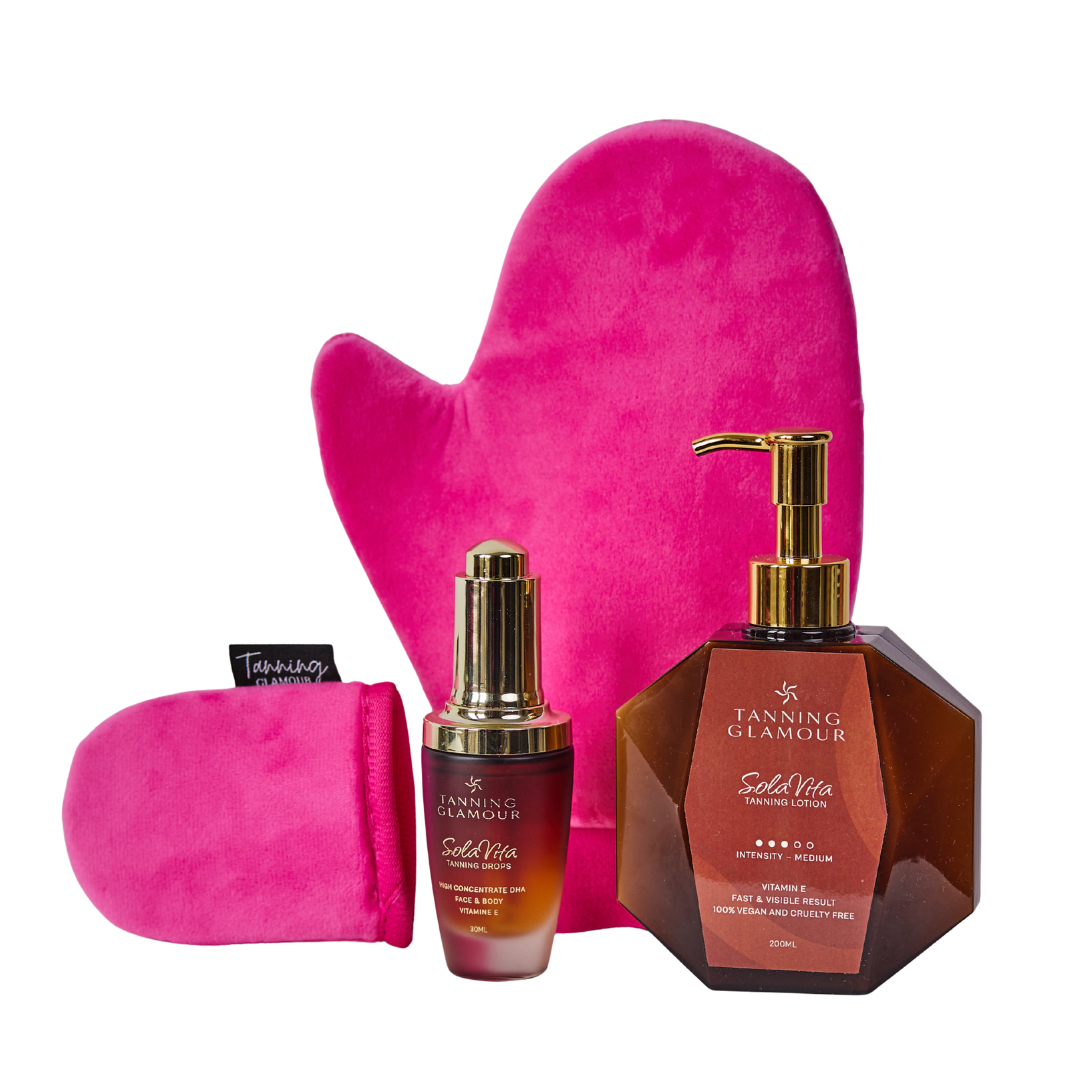
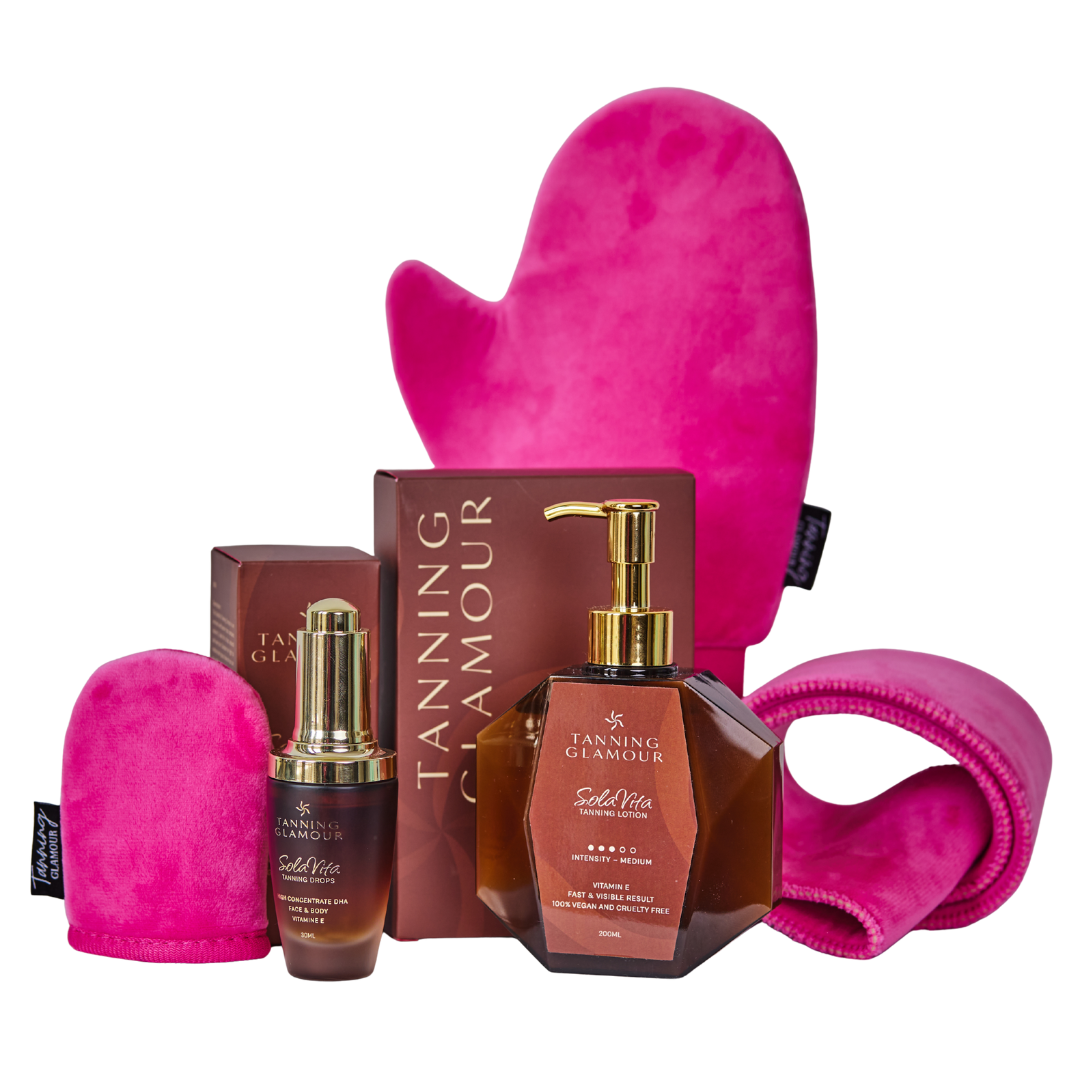
For those who like to control the intensity of their tan, SolaVita Self-Tanning Drops are an excellent choice. By adding a few drops to your daily face cream or body lotion, you can gradually build up a natural glow that perfectly matches your desired intensity.
Benefits of self-tanners over sun exposure
No UV damage: Self-tanners offer a cosmetic color change without health risks
Control: You determine the intensity by the number of applications
No dependence on the weather: A sunny complexion even in winter
Even result: With the right technique, no spots or streaks
Quickly visible: Results within 2-4 hours after application
Tips for an even and long-lasting tan
Whether you choose the sun or self-tanner, good preparation and aftercare make the difference between a radiant complexion and a patchy result. Here are professional tips for optimal results.
Preparation is the foundation
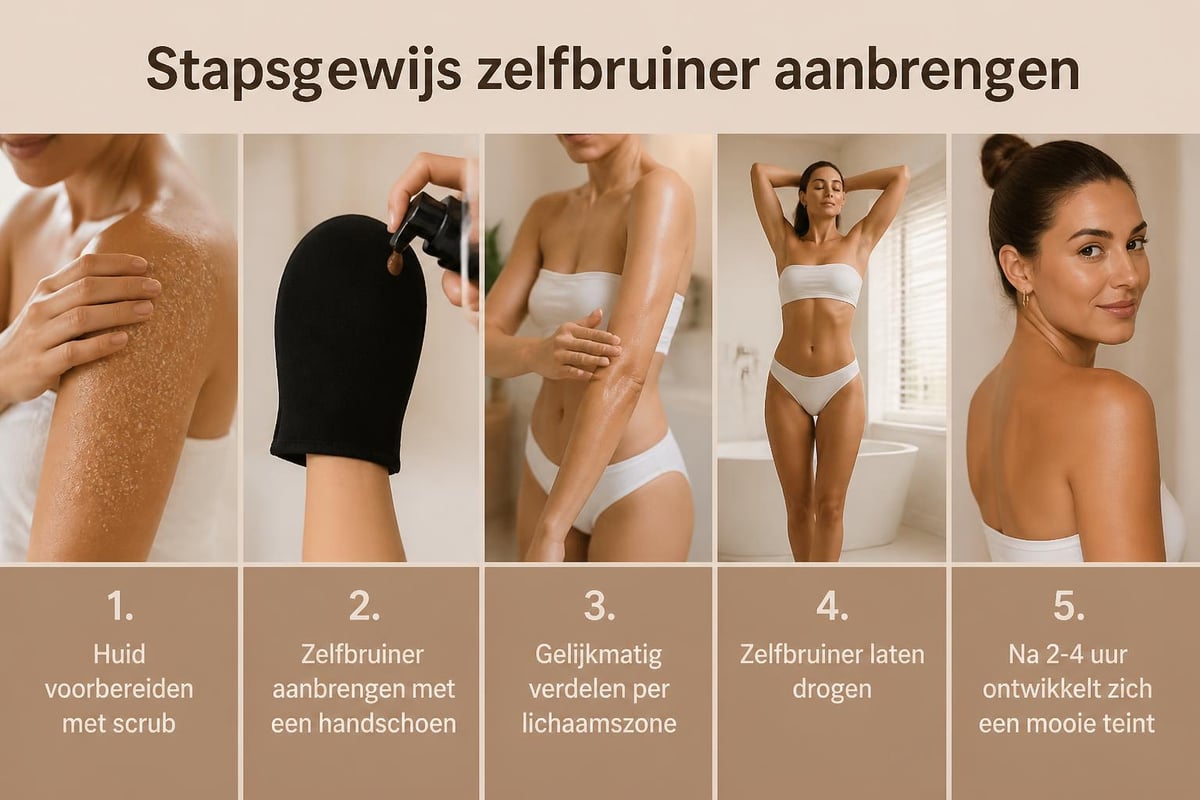
Exfoliation is the most important step for an even tan. Use a gentle body scrub 24 hours before sunbathing or applying self-tanner to remove dead skin cells. Pay extra attention to:
Elbows and knees
Ankles and feet
Hands and wrists
Knuckles and nail beds
Applying a light, non-greasy moisturizer immediately after scrubbing provides a smooth base. For more practical tips, visit Tanning Glamour, where extensive information can be found on achieving a perfect tan without sun exposure.
Hydration for a long-lasting result
Hydrated skin retains a tan longer. This applies to both sun tanning and self-tanner application:
Drink enough water (at least 1.5-2 liters per day)
Use a moisturizing body lotion daily
Avoid excessively long, hot showers that dehydrate the skin
Choose alcohol-free products that can dehydrate the skin
For those who want to work responsibly on personal goals, including skincare and healthy habits, DoReset offers a 90-day reset program that helps build sustainable routines for a radiant look from within.
Special attention for difficult areas
Some body parts require extra attention when tanning. Legs, for example, often tan slower than the rest of the body due to a thicker layer of skin and fewer melanocytes.
Making legs tan faster
BEAM offers five tips to get a fast and responsible tan. For legs specifically, these strategies work well:
Utilize reflection: Sunbathing near water increases UV reflection and speeds up the process
Exfoliate: Regular scrubbing removes old skin cells and allows new cells to react better
Vary position: Regularly rotate your legs while sunbathing for even exposure
Stimulate blood circulation: A short massage before sunbathing improves circulation
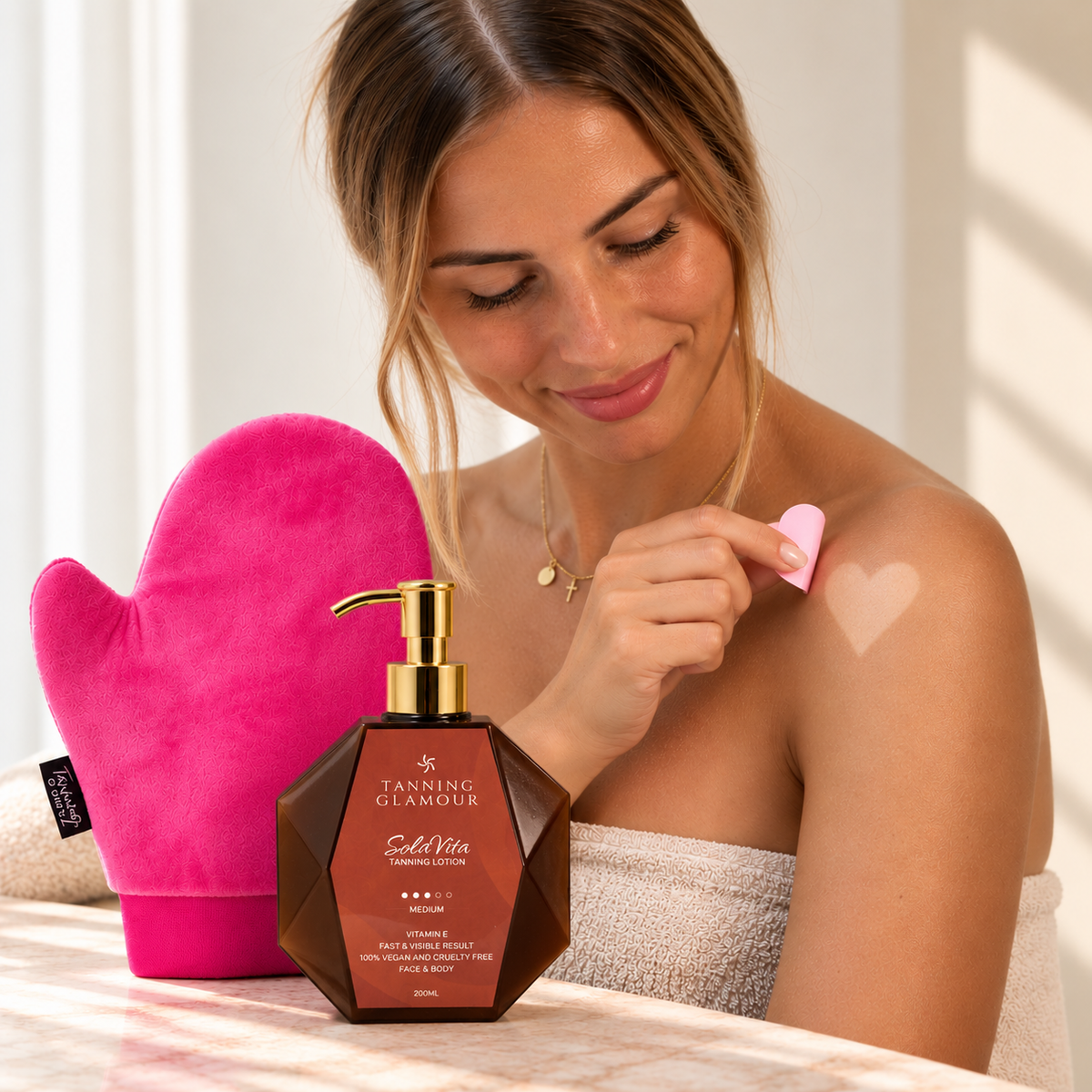
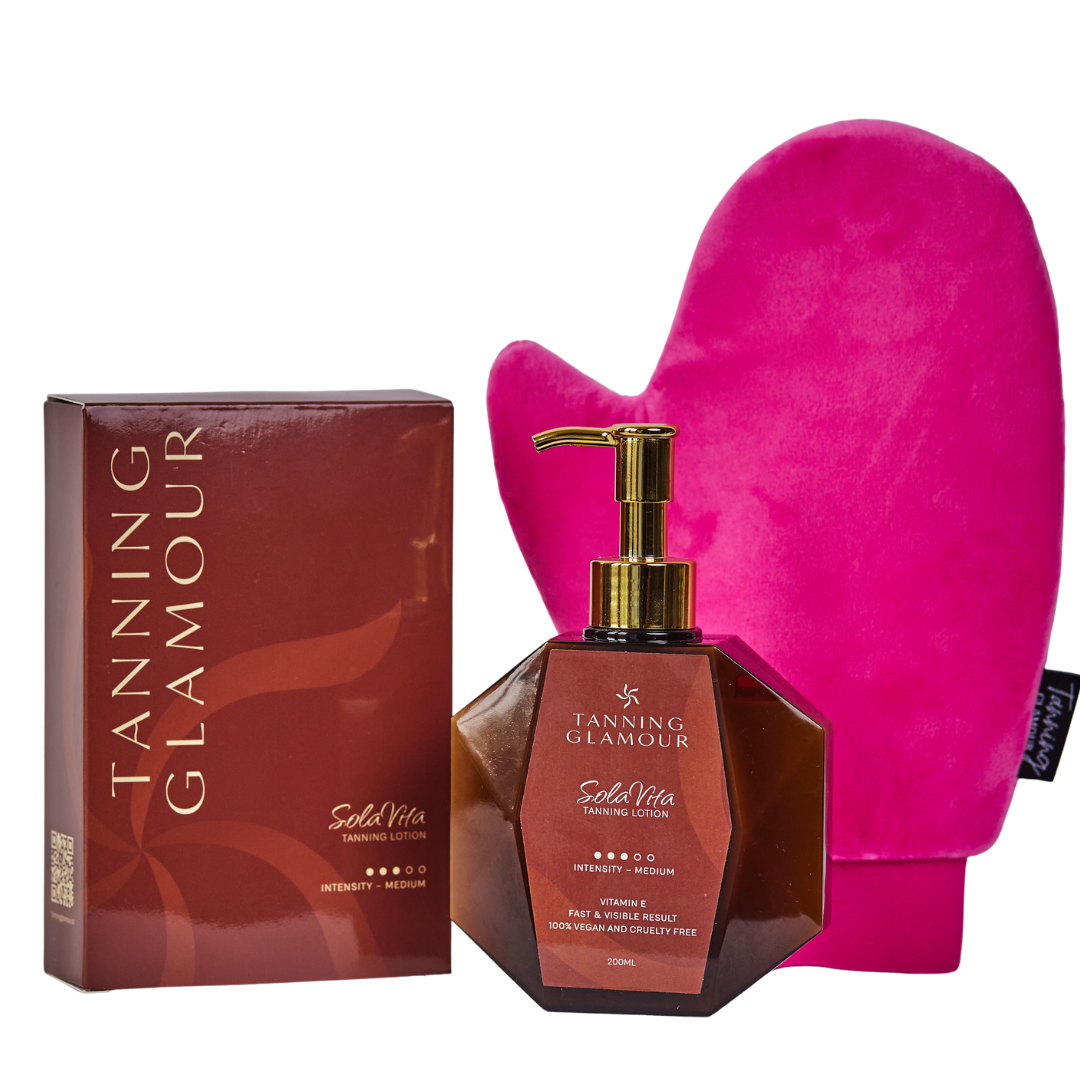
When using self-tanners, legs also deserve extra attention. Apply the product in circular motions and use an application mitt for a streak-free result.
Face: subtle and natural tanning
The face is the most visible part of your body and requires a careful approach. Too much sun or a too dark self-tanner can look unnatural.
For natural facial tanning through the sun:
Use at least SPF 30, even if you want to tan
Wear a hat during peak hours
Pay attention to vulnerable areas such as the nose and forehead
Protect your lips with SPF lip balm
For self-tanner on the face:
Choose products specifically for facial use or use drops
Start with a lower concentration
Blend carefully at the hairline, eyebrows, and jawlines
Wash hands immediately after application
Aftercare: maintaining your tan
After achieving your desired tan, it is important to maintain it for as long as possible. Various factors influence how long a tan remains visible.
Maintaining a natural tan
A sun tan naturally fades as skin cells renew themselves. This process takes about 28 days. You can prolong the tan by:
Regular, short sun exposure (with protection)
Intensive skin hydration
Avoiding aggressive scrubs
Using after-sun products with ingredients that slow down cell renewal
Note that regular sunbathing to maintain your tan further increases health risks. For those who want a constant complexion without these risks, self-tanners are a wiser alternative.
Keeping self-tanner beautiful longer
Action |
Effect on durability |
Recommendation |
|---|---|---|
Daily moisturising |
+++ Very positive |
Use rich body lotion twice daily |
Hot showering |
- Negative |
Choose lukewarm water, short showers |
Scrubbing |
-- Very negative |
Only for reapplication |
Chlorinated water |
-- Very negative |
Rinse immediately, reapply lotion |
Wet sweating |
- Negative |
Dab dry, do not rub |
With proper aftercare, a self-tanner can look good for 5-7 days. For those seeking a permanent solution, the best advice is to reapply every 5-6 days for a consistent, natural glow.
Common tanning mistakes
Even with the best intentions, many people make mistakes that affect their results or increase health risks. These common pitfalls can be easily avoided.
Sunbathing mistakes
The biggest mistake is overestimating skin tolerance. Many people believe they can stay in the sun longer than is wise, especially when they already have a bit of a tan. However, an existing tan offers only minimal extra protection, comparable to SPF 2-4.
Other common mistakes:
Forgetting sun protection on cloudy days (up to 80% UV penetrates clouds)
Underestimating reflection from water, sand, or snow
Sunbathing for too long without a break
Not reapplying sunscreen after swimming
Believing a tanning bed is "safer" than natural sunlight
Self-tanning mistakes
With self-tanner, a lack of preparation leads to most problems. Typical mistakes include:
Not exfoliating before application: Results in patchy, uneven colour
Using too much product: Gives an unnatural, orange tint
Forgetting to blend: Causes distinct lines at wrists, ankles, and hairline
Dressing immediately: Product can rub off before it's fully absorbed
Sweating during drying: Can cause streaks
Most of these problems can be prevented with proper preparation and technique. If unsure about application, detailed instructions and frequently asked questions can help achieve professional results at home.
The future of safe tanning
By 2026, we'll see a clear shift towards health and wellness. More and more people understand the risks of excessive sun exposure and are looking for safer alternatives for a tanned look.
Innovations in self-tanners
Modern self-tanners are light years away from the products of ten years ago. The latest formulas offer:
Natural, warm undertones without orange discolouration
Fast absorption without stickiness
Pleasant scents instead of the typical DHA odour
Hydrating ingredients that provide dual care
Adjustable intensity for personalised results
In addition, we are seeing growth in hybrid products that combine skincare with gradual tanning. This makes a tanned complexion part of the daily skincare routine instead of a separate step.
Awareness and education
The role of online communities and information exchange is increasing. Platforms like Talk Shop, although primarily focused on e-commerce, show how communities share knowledge and help consumers make informed choices. We also see this trend in the beauty and skincare industry, where consumers advise each other on products and safe applications.
The shift towards "skinimalism" and natural beauty means that a subtle, healthy glow is becoming more important than a dark tan. This aligns perfectly with the possibilities of modern self-tanners that deliver a natural result without health risks.
Tanning in different seasons
The approach to tanning varies by season. Each season brings specific challenges and opportunities for those who want to maintain or build a tanned complexion.
Summer: peak season for sun tanning
In the summer months, the UV index is at its highest. This means faster tanning, but also an increased risk of damage. Essential summer tips:
Start with short sessions of 10-15 minutes
Increase very gradually, a maximum of 5 minutes per day
Multiple applications of sun protection are necessary
Seek shade during the strongest hours (12:00-15:00)
Combine sun protection with physical barriers such as clothing and hats
For holidaymakers, it is tempting to quickly build up a lot of colour. However, this is when most sun damage occurs. A better strategy is to start with self-tanner before going on holiday, so you already have a base and are less driven by the desire to get a quick tan.
Winter: maintenance and alternatives
In the winter months, UV intensity decreases and natural tanning is barely possible. This is the season where self-tanners excel.
Winter skin challenges:
Dry air (indoors and outdoors) dehydrates the skin faster
Central heating accelerates skin cell renewal
Less sunlight can affect mood (vitamin D deficiency)
Thick clothing can cause self-tanner to rub off unevenly
Intensive hydration is crucial in winter for a beautiful self-tan. Use rich body lotions and consider a humidifier at home. For the face, gradual tanners work perfectly: they give a subtle glow that can bring back the healthy, sunny feeling of summer.
Safe tanning requires a conscious balance between the desired result and the protection of your skin. Whether you choose responsible sun exposure with good protection or modern self-tanners, the most important thing is that your choice aligns with your lifestyle and health. Tanning Glamour offers natural self-tanners that give you a radiant, even complexion within hours without the risks of UV radiation. Discover how you can enjoy a sunny glow all year round that looks natural and lasts up to a week with the right products.
Ontdek jouw mooiste glow
Verzorgende zelfbruiners van SolaVita - streeploos, geen oranje.
Read more
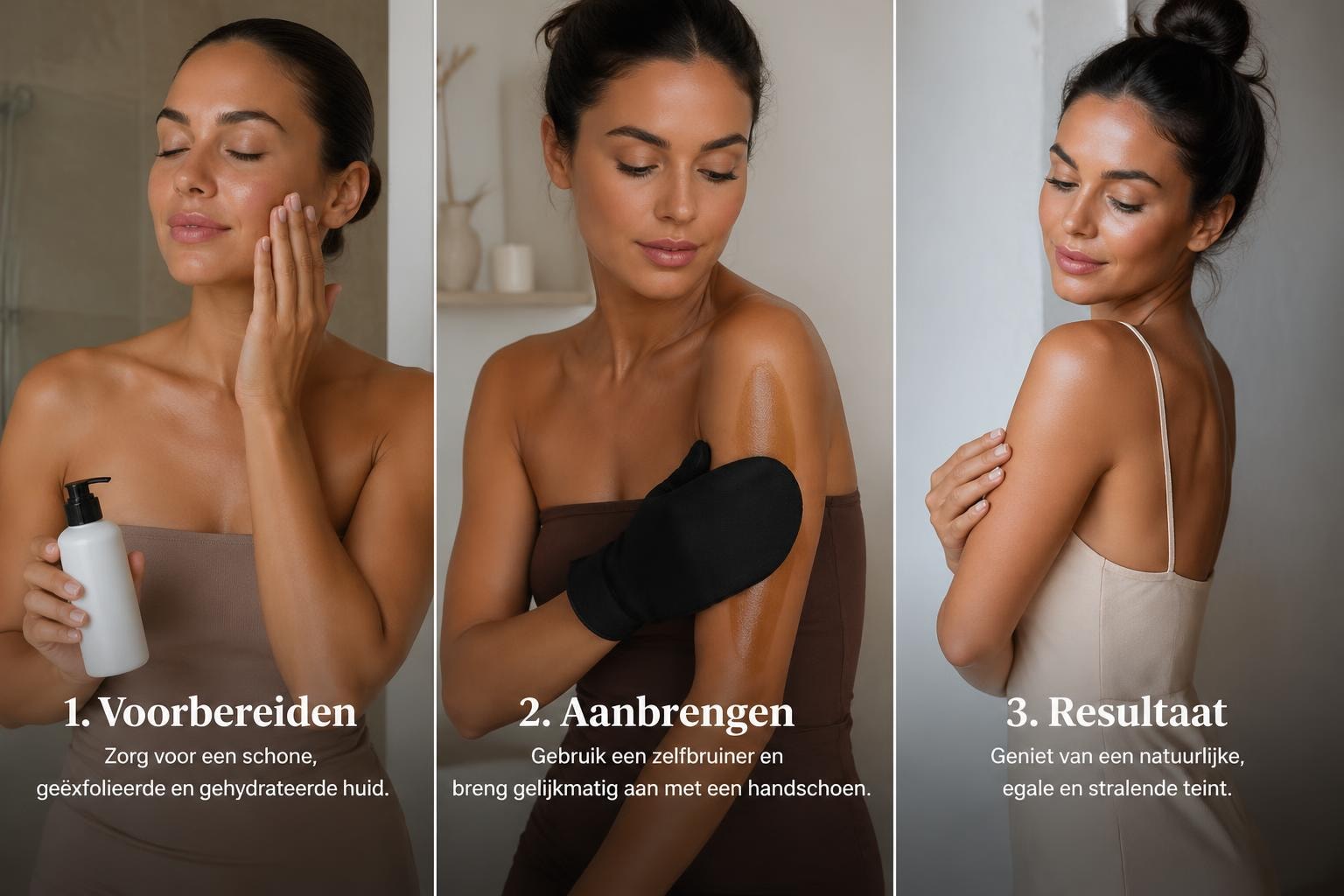
Discover how to create a perfect tan at home with natural self-tanners. Tips for an even, radiant complexion without sun in 2026.
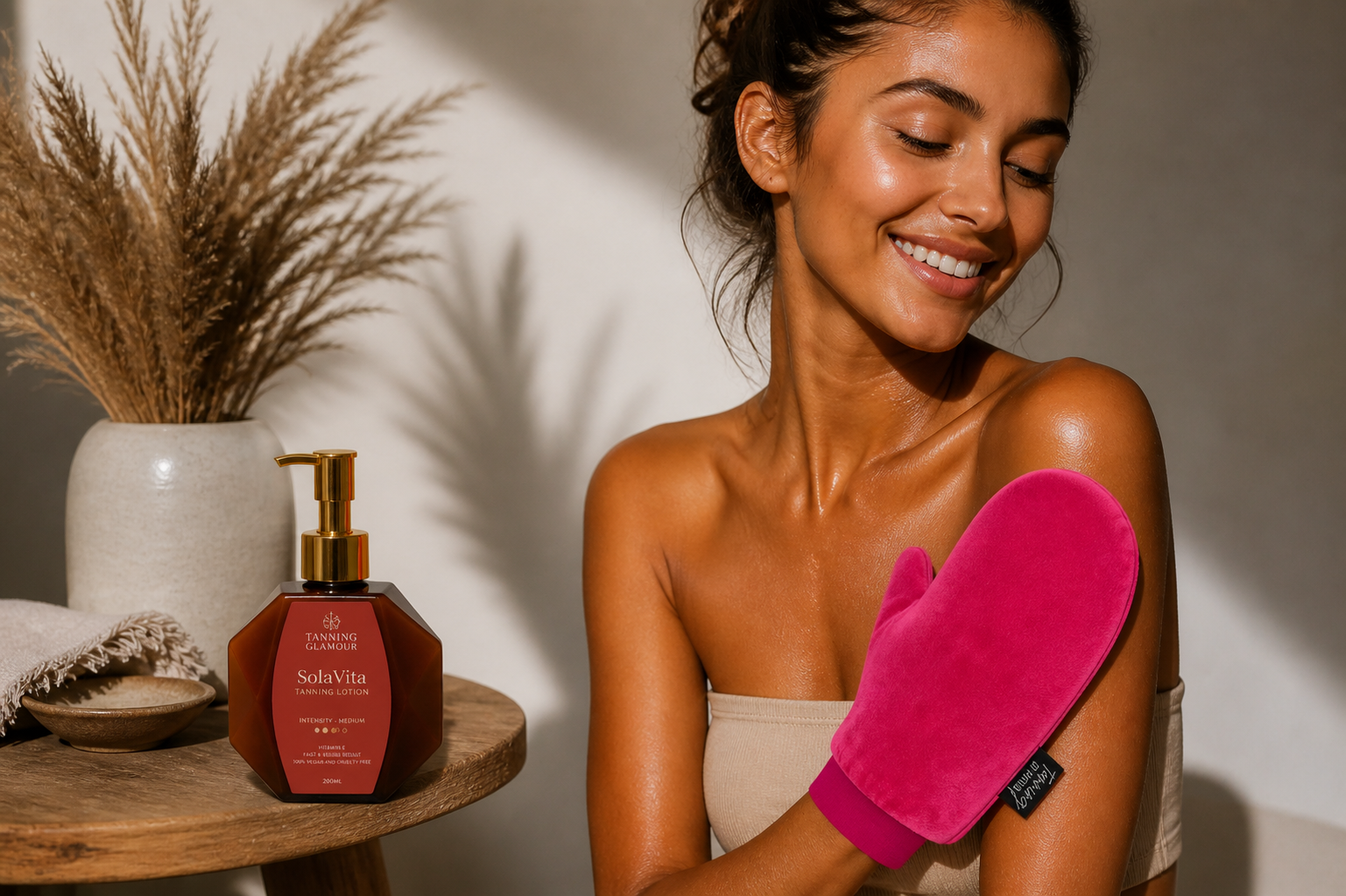
A tan glow gives you a natural, radiant complexion without the sun. Discover how to create and maintain this warm glow with self-tanner.